


Nearly half of the Indonesian population lives in landslide-risk zones. In December 2014 alone, more than 70 people were killed in a landslide in Banjarnegara; the entire year saw 376 landslides, claiming 248 lives.
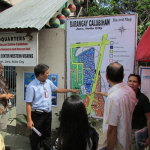
During the Third UN World Conference on Disaster Risk Reduction side event, “Extending Best Practices in Early Warning Systems for Building Community Resilience,” R3ADY Asia-Pacific, Universitas Gadjah Mada, University of Hawaii, and Pacific Disaster Center will highlight a sustainable community-based landslide early warning system approach, which includes hazard risk assessment, mapping, and training. The approach has been implemented in twelve provinces in Indonesia and Myanmar, and has saved lives. Research is underway to expand and extend best practices at all levels using tools like InAWARE. This event will bring together partners and key stakeholders to provide an overview of the project and discuss the kinds of mechanisms and resources needed to expand and scale nation- or region-wide.
The event will feature two panel discussions on outcomes and opportunities for building community resilience through early warning systems. The first panel will focus on the threat and impacts of landslides and provide an overview of an effort to scale and transfer best practices in community-based early warning systems. The panel will be followed by a moderated discussion on the mechanisms and resources needed to share best practices with other communities and link with national, regional, and international systems for disaster risk reduction.
Panel I: A Persistent Threat and an Effective Response
Discussants: Universitas Gadja Mada (UGM), University of Hawai’i (UH), and Pacific Disaster Center (PDC).
Panel II: Scaling a Best Practice: Policy and Programmatic Perspectives
Discussants: Indonesian National Disaster Management Agency (BNPB) and the International Consortium on Landslides.