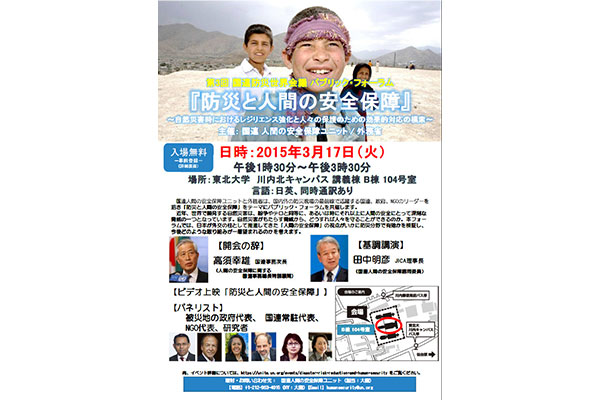



Natural disasters and their interface with human security challenge us at numerous levels. Natural disasters have claimed more lives and affected more people in recent years than ever before. In 2012 alone, there were 364 natural disasters, threatening approximately 139 million people worldwide and inflicting more than US$158 billion in damages. These events disrupt and erode livelihoods, increase the spread of infectious diseases and threaten the coping mechanisms of individuals and communities. Vulnerable groups are particularly at risk, not only from the immediate impacts of natural disasters but also from the knock-on risk factors such as displacement, growing competition over scarce resources and rising tensions. Since the consequences of natural disasters are multiple and often devastating in nature, a human security approach that helps mitigate the multidimensional consequences of natural disasters is an urgent priority and an important step in building the resilience and the capacities of communities to manage these risks in a sustainable manner.
Programme:
- Opening Remarks
Mr. Yukio Takasu, Special Adviser to the Secretary-General on Human Security - Video on Human Security and Disaster Risk Reduction
- Mr. Akihiko Tanaka, Member of the Advisory Board on Human Security and President of the Japan International Cooperation Agency
- Panel Discussion on the Application of the Human Security Approach
Moderator: UNISDR
H.E. Mr. Ahmed Sareer, Permanent Representative of Maldives to the United Nations and Chair of the Alliance of Small Island States
Mr. Peter Burgess, Professor, Peace Research Institute Oslo
Ms. Nardos Bekele-Thomas, United Nations Resident Coordinator for Kenya
Mr. Stefan Priesner, United Nations Resident Coordinator for Uzbekistan
Ms. Irena Vojackova Sollorano, United Nations Resident Coordinator for Serbia
Ms. Yukie Osa, President of the Association for Aid and Relief, Japan